Understanding why compliance has become a business requirement – not just a security requirement.
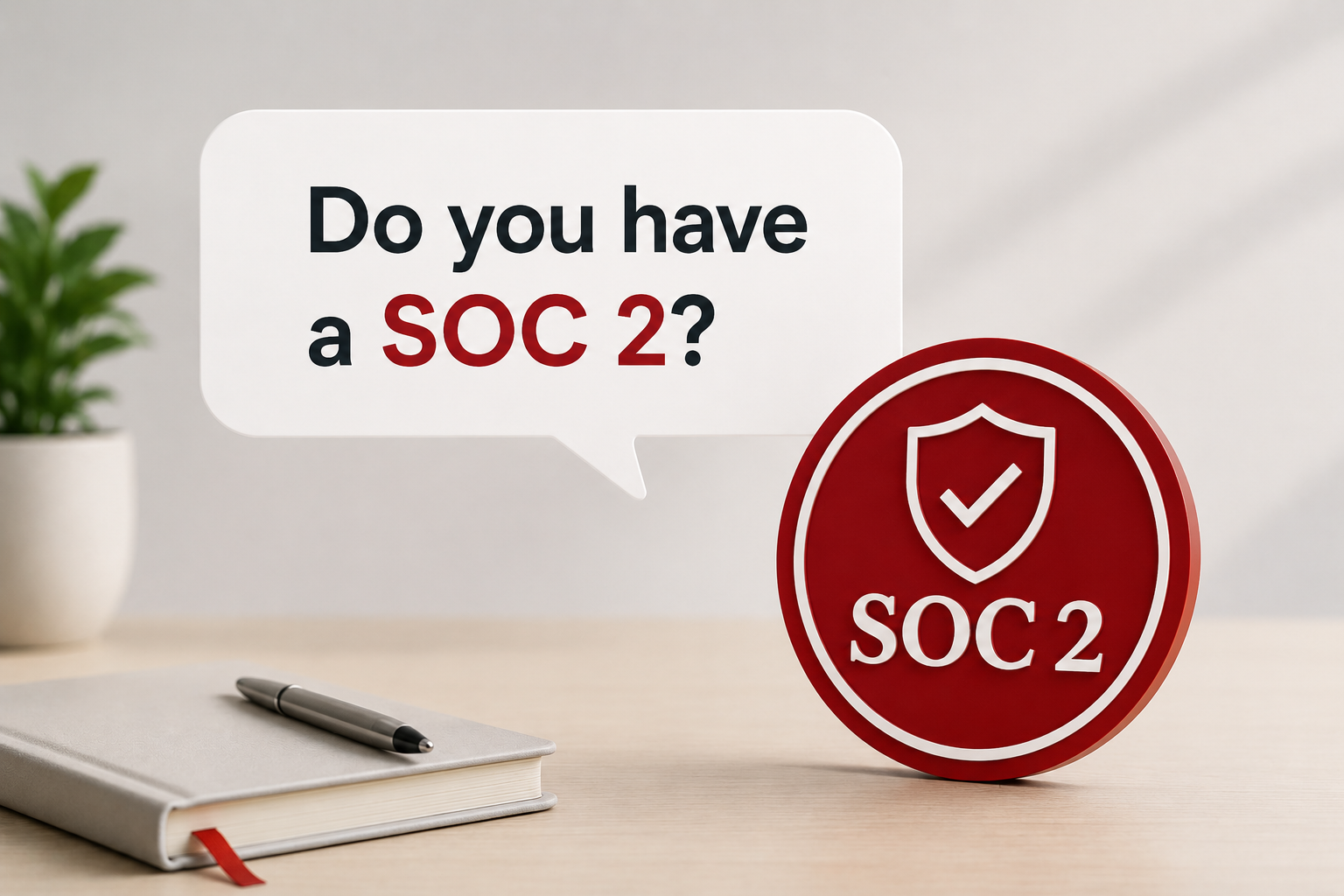
Many startup founders are surprised when a prospective customer suddenly asks:
Do you have a SOC 2 report?
The question often comes after months of sales conversations, product demonstrations, and pricing discussions. Sometimes it’s the final hurdle before a deal can close.
Unfortunately, it’s also where many startups discover they’re not prepared.
It’s Not About Distrust
One reality many startups overlook is that their customers have compliance obligations of their own.
Large organizations may be subject to:
- SOC 2 requirements
- ISO 27001 requirements
- Privacy regulations
- Industry-specific regulations
- Internal risk management policies
When they choose a vendor, they inherit some of the risk associated with that vendor.
As a result, procurement teams and security teams want evidence that your organization takes security seriously.
SOC 2 provides that evidence.
Security Questionnaires Are Becoming More Common
Even startups with only a handful of employees are increasingly receiving security questionnaires from prospective customers.
These questionnaires often ask about:
- Access controls
- Data encryption
- Incident response
- Vendor management
- Employee onboarding and offboarding
- Vulnerability management
- Business continuity planning
Without documented processes, answering these questions can become difficult.
A SOC 2 program helps organizations build the structure needed to respond confidently and consistently.
SOC 2 Can Accelerate Sales
One of the biggest misconceptions about compliance is that it’s purely a security expense.
In reality, SOC 2 is often a revenue enabler.
Organizations with a mature security program typically experience:
- Faster vendor reviews
- Shorter procurement cycles
- Greater customer trust
- Fewer security objections during sales
- Access to larger enterprise opportunities
For many startups, the return on investment comes from deals won rather than audits completed.
Waiting Until a Customer Asks Is Often Too Late
Another common mistake is waiting until a major prospect requests SOC 2 before starting the process.
Depending on your environment and maturity level, readiness activities and audits can take several months.
By the time a customer asks for a SOC 2 report, they may already expect you to have one.
Preparing early gives startups a competitive advantage and prevents compliance from becoming a sales bottleneck.
Key Takeaways
Enterprise customers aren’t asking for SOC 2 to create unnecessary paperwork.
They’re looking for evidence that your organization can protect sensitive information, manage risk responsibly, and operate with maturity.
As startups grow and begin serving larger customers, compliance becomes less about checking boxes and more about building trust.
At CUNDware, we help startups build practical SOC 2 readiness programs that support both security objectives and business growth.